

Many of us who have started looking into the available artificial intelligence (AI) programs have experienced a range of emotions: astonishment, concern, shock, and even anger.
Who knew that by 2023, these programs would be so relevant, so useful? The pace of progress in AI raises the specter of a race towards a dystopian future, driven by researchers and developers who are less concerned about humanity and our relationship with AI than with progress for progress’ sake.
Feelings of sci-fi peril aside, the capabilities of programs like ChatGPT are remarkable. I’ve tried it, and I can’t say that I would be able to easily tell the difference between a passage written by the program or by a person. That’s why we’ve seen many articles in the local press and even in journals speculating on whether something as basic as student essays written with AI could receive passing grades. I believe today they can, and more. What’s more, an aggressive writer of a term paper might use AI to collect all of the necessary basic information and simply edit it to reflect that person’s own style of writing. This process may make differentiating a legitimate student-written paper from an AI-generated one extremely difficult indeed.
There have been reports of incorrect information being culled or even “invented” by the AI programs. I’ve not seen it myself in responses to some questions I’ve asked (both general and technical subjects), but the issue is fascinating. Perhaps it depends on what you ask and how you ask it. What would prompt an AI program to create its own, wrong response, is beyond me.
One of my first tests of ChatGPT was to ask “How do you write a blog?” The result was a well-formulated, 12-step plan, including superficial advice on everything from choosing a topic to marketing the blog. I decided to see how far I could dig into its knowledge base, asking for detailed advice about how to choose a blog topic. The program responded with 8 more steps, including identifying your passions and expertise, considering your target audience, finding a unique perspective, brainstorming ideas, and trust your instincts. All of the suggestions were sound but rendered in a fairly generic voice.
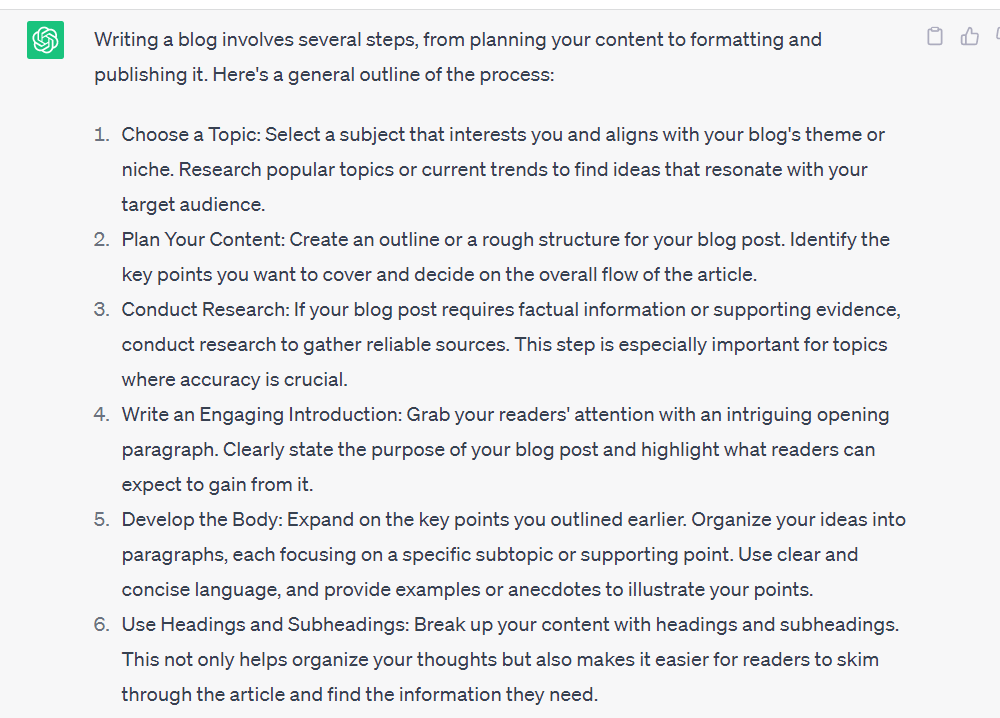
That was the common thread to its responses. The questions I had asked were all answered in the same way: with a sentence of introduction or disclaimer followed by numeric steps written without verve or enthusiasm, with a closing statement: “Remember, writing a blog is an ongoing process. Consistently creating high-quality content and engaging with your readers will help you build a successful blog over time.”
For marketing communications, the advice provided through today’s AI programs may be applicable, but they don’t replace the human voice in customer-facing communications. In other words, can AI write an article about developing a blog? Yes.
Is it interesting? Possibly.
Is it engaging and readable? Not really.
I’ve read examples of poetry created through AI and images generated by the programs, but I haven’t yet seen it use language to actively attract or compel attention. That may only be a matter of programming. However, this still is a crucial factor in marketing communications. In other words, it can competently inform about how to write a blog but what about writing one that accomplishes the task?
I’m not about to retire my keyboard just yet. But maybe that future isn’t far off…
 Writing and Editing for Small Businesses
Leave a comment